
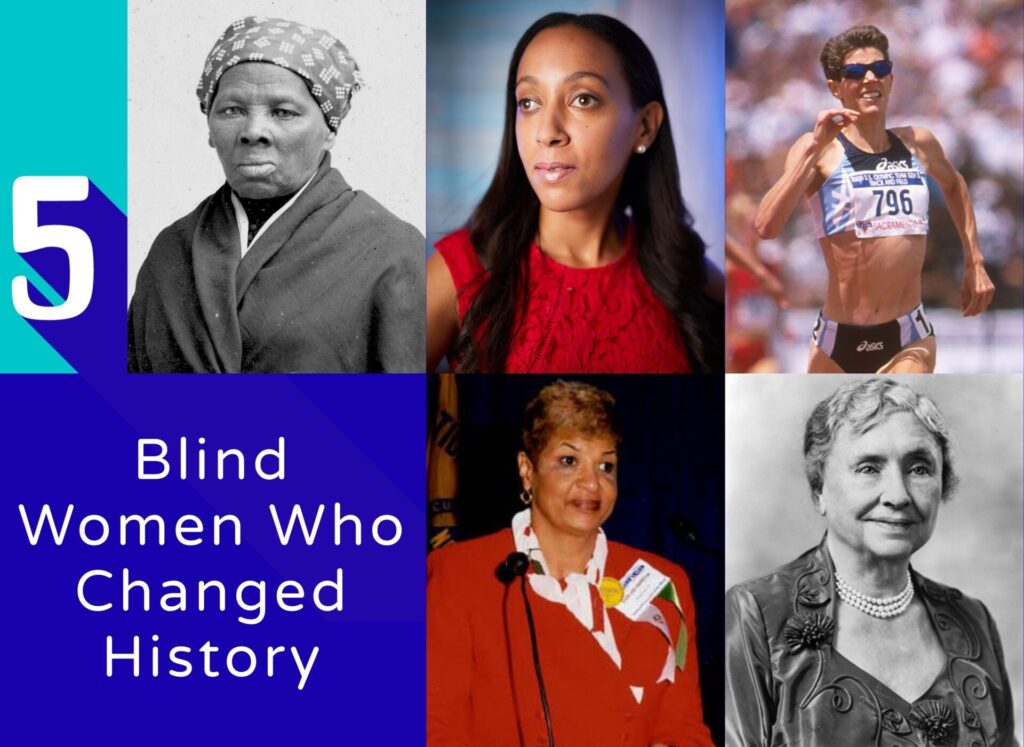
Every March, the United States celebrates Women’s History Month, a time to recognise the achievements of women whose work has shaped society, culture, and civil rights. Although this is an American celebration, with International Women’s Day having also just passed last weekend, we wanted to commemorate these women regardless—to shine a spotlight on the lives of five blind and visually impaired women whose achievements have changed the course of history, often in ways that are still not widely known.
From abolitionists and educators to athletes and disability rights advocates, these women challenged expectations and expanded what independence and leadership could look like. Here are five remarkable blind women in history whose contributions continue to inspire.
Ever Lee Hairston: Civil Rights Advocate and Community Leader
Ever Lee Hairston was a pioneering activist who worked to expand opportunities for blind Americans.
As a blind African American woman working during the civil rights era, she advocated for greater inclusion in education, employment, and community life.
Hairston worked with organisations such as the National Federation of the Blind, helping strengthen the movement for disability rights while also addressing racial inequality within access to education and services.
Her work contributed to broader efforts to ensure that blind Americans could live, work, and participate fully in society.
Harriet Tubman: Abolitionist and Freedom Leader
Harriet Tubman is widely known as one of the most courageous leaders of the Underground Railroad, guiding enslaved people to freedom in the decades before the American Civil War.
Less widely known is that Tubman lived with significant vision impairment and neurological symptoms after suffering a traumatic head injury as a teenager while enslaved.
Despite lifelong headaches, seizures, and vision difficulties, Tubman led dozens of dangerous rescue missions and later served as a scout, nurse, and spy for the Union Army.
Her leadership helped free hundreds of enslaved people and made her one of the most respected figures in American history.
Haben Girma: Disability Rights Lawyer and Global Advocate
Haben Girma made history as the first deafblind graduate of Harvard Law School.
Today, she is an internationally recognised disability rights lawyer and advocate for accessible technology, education, and public spaces.
Girma has worked with governments, universities, and technology companies to encourage accessibility in digital design and inclusive policy.
In recognition of her work, she was named a White House Champion of Change under the administration of Barack Obama.
Her advocacy continues to influence conversations about accessibility and equal opportunity worldwide.
Marla Runyan: Olympian and Record-Breaking Runner
Marla Runyan is one of the most accomplished visually impaired athletes in American history.
Diagnosed with Stargardt disease, a degenerative eye condition, Runyan gradually lost most of her central vision.
She went on to win multiple gold medals in the Paralympic Games before becoming the first legally blind athlete to compete in the Olympic Games.
Her achievements challenged assumptions about disability in sport and helped expand opportunities for athletes with visual impairments.
Helen Keller: Author, Activist, and Global Symbol of Disability Rights
Perhaps the most widely recognised blind woman in history, Helen Keller became deafblind at 19 months old after an illness.
With the help of her teacher, Anne Sullivan, Keller learned to communicate through tactile sign language and went on to become a prolific writer and public speaker.
Over the course of her life, she published books, lectured internationally, and advocated for disability rights, women’s suffrage, and workers’ rights.
Her life helped change public understanding of disability and education, demonstrating that blind and deafblind people could participate fully in intellectual and political life.
Recognising the Legacy of Blind Women Leaders
We hope you’ve enjoyed reading about the inspirational accomplishments of these five blind women who have changed history. Their stories span centuries and fields— from abolition and civil rights to law, sports, and education.
What connects them is not only their resilience, but their determination to expand what society believed blind women could achieve.
In honour of International Women’s Day, and during the course of Women’s History Month in the US, their lives remind us that progress often comes from individuals who challenge expectations and open doors for those who follow.
Their achievements continue to shape conversations about equality, access, and opportunity today.
Check out our previous blog posts here.