
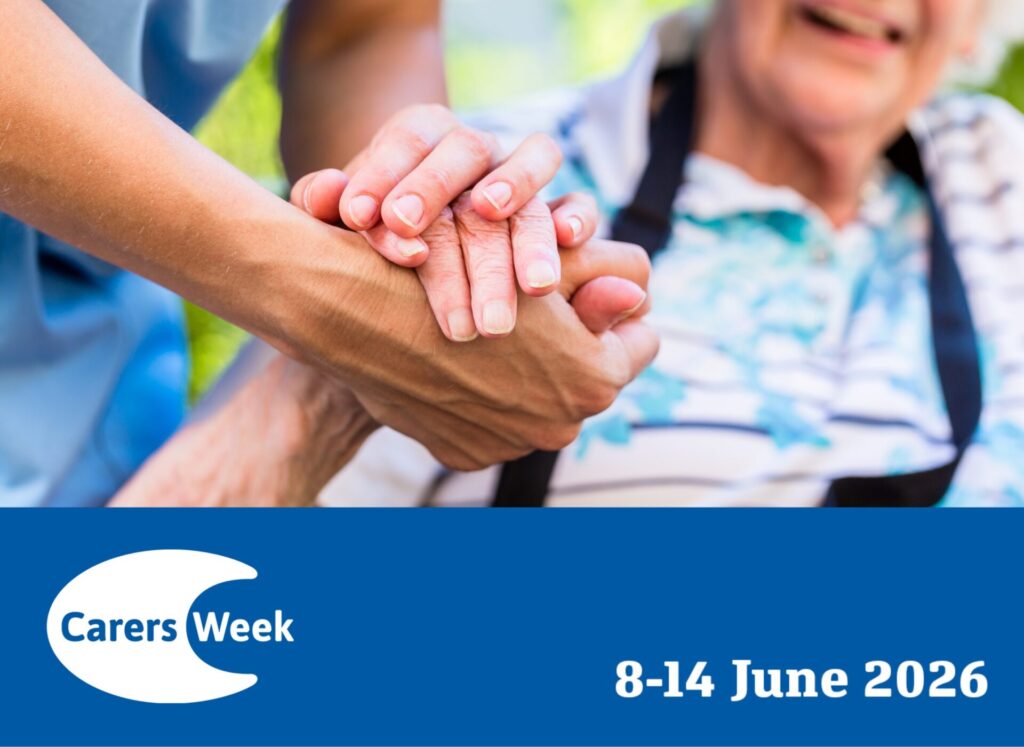
This week, June 8–14, is Carers Week 2026, with the theme “Building Carer-Friendly Communities”. Carers Week is an opportunity to recognise the 5.8 million unpaid carers in the UK, and to share resources that make the practical side of caring a little easier. That’s why we put together this practical guide specifically for carers supporting someone with sight loss. It covers the technology that will actually help, the organisations worth knowing about, and the things that are easy to miss when you’re in the middle of it.
A
What Caring for Someone With Sight Loss Often Looks Like
It rarely starts with a formal diagnosis and a clear plan. For most carers supporting someone with sight loss, it begins with small things. Helping to read a letter. Figuring out why the phone settings aren’t working. Being the one who knows where things are kept.
These tasks accumulate quietly. The person doing them often doesn’t think of themselves as a carer — they’re just a daughter, a son, a neighbour, a friend who steps in when needed. But the cumulative weight is real, and so is the specific knowledge required.
Sight loss varies enormously. Someone with age-related macular degeneration has different needs than someone with glaucoma, retinitis pigmentosa, or a sudden vision loss following illness or injury. The practical implications of each are different, and so is the pace at which things change. Understanding the specific condition, what it affects, and how it typically progresses is one of the most useful things a carer can do.
A
RNIB: The Most Important Organisation to Know
If you’re supporting someone with sight loss in the UK and you’re not already familiar with RNIB, start here.
RNIB (Royal National Institute of Blind People) offers a helpline, a library of accessible books and resources, equipment and technology advice, local support groups, and guidance on benefits and entitlements. Their helpline (0303 123 9999) is staffed by people who know the system and can advise on what support the person you’re caring for is entitled to, what equipment is available, and what to ask for from health services.
RNIB’s resources for carers and families are worth bookmarking. They cover everything from how to guide someone with sight loss safely to how to have the early conversations about changing needs.
A
Technology that Genuinely Helps
One of the most common frustrations for carers is the gap between what technology is theoretically supposed to do and what it actually does reliably for the person they’re supporting.
A few things worth knowing:
Smartphones with accessibility settings can work well for people who were already comfortable smartphone users before their sight loss. For people who weren’t, or for those who are further along in vision loss, they often ask more than they give.
Big-button phones are simple but limited. They work for calls; they don’t support reading, navigation, or accessing information independently.
Voice-operated smartphones designed specifically for people with sight loss take a different approach. RealSAM Pocket replaces the standard phone interface entirely with voice: no touchscreen navigation, no apps to find, no visual menus. The person you’re supporting taps the screen once and says what they want. Calls, messages, audiobooks, weather, navigation, object recognition, all by voice.
For carers, this matters practically: it reduces the number of calls asking for help with settings, the visits to troubleshoot apps, and the quiet anxiety about whether someone can make a call if they need to.
A
Guide Dogs UK and Local Sight Loss Charities
Guide Dogs UK offers more than guide dogs. Their My Sighted Guide service trains sighted people, including family members, to guide someone with sight loss safely and confidently. If the person you’re supporting is nervous about going out, or if you’re unsure how to help them navigate unfamiliar environments, this is genuinely worth looking into.
Local sight loss charities often know about services and activities that don’t appear in national listings: peer support groups, local volunteers, day trips, and activity programmes. Your nearest RNIB local group or regional sight loss charity is usually the best place to start. Caring for someone with sight loss.
A
Looking After Yourself as a Carer
Carers Week exists in part because caring is often unrecognised, unpaid, and under-resourced. More than half of unpaid carers say they feel overwhelmed often or always. That’s not a personal failing. It’s what happens when significant responsibility lands without sufficient support.
Carers UK provides advice on benefits and entitlements (many carers don’t claim what they’re entitled to), practical guidance on navigating care services, and a community of people in similar situations. Their helpline is 0808 808 7777.
If the person you’re caring for has not had a needs assessment from their local council, they may be entitled to one, as may you, as their carer. These assessments can unlock additional support, equipment, and respite provision. RNIB’s helpline can advise on how to request one.
A
A Note on Independence
The instinct when supporting someone with sight loss is often to do things for them, which is kind, but can quietly erode independence over time. The research on this is detailed: maintaining independence, even in small ways, is closely linked to wellbeing and quality of life for people with sight loss. Caring for someone with sight loss.
The most helpful approach is usually to support independence rather than replace it — finding technology that allows someone to do something themselves, rather than doing it for them. It’s a small distinction that makes a real practical difference.
If you’d like to find out whether RealSAM Pocket might help the person you’re supporting do more independently, our team is happy to have that conversation: no pressure and no obligation. You can reach us at realsam.co.uk/pocket.
A
Key resources
- RNIB helpline: 0303 123 9999 — rnib.org.uk
- Carers UK helpline: 0808 808 7777 — carersuk.org
- Guide Dogs UK: guidedogs.org.uk
- RealSAM Pocket: realsam.co.uk/pocket
A
This guide was published during Carers Week 2026. RealSAM Pocket is a voice-operated smartphone for blind and partially sighted people — one tap, your voice, no visual interface required. Find out more →