
So, what actually is deafblindness?
Because one of the most persistent problems with how deafblindness is understood (or rather, misunderstood) is that the conversation tends to start and end with loss; what someone can’t see, can’t hear, can’t do. This week is about the other side of that story.
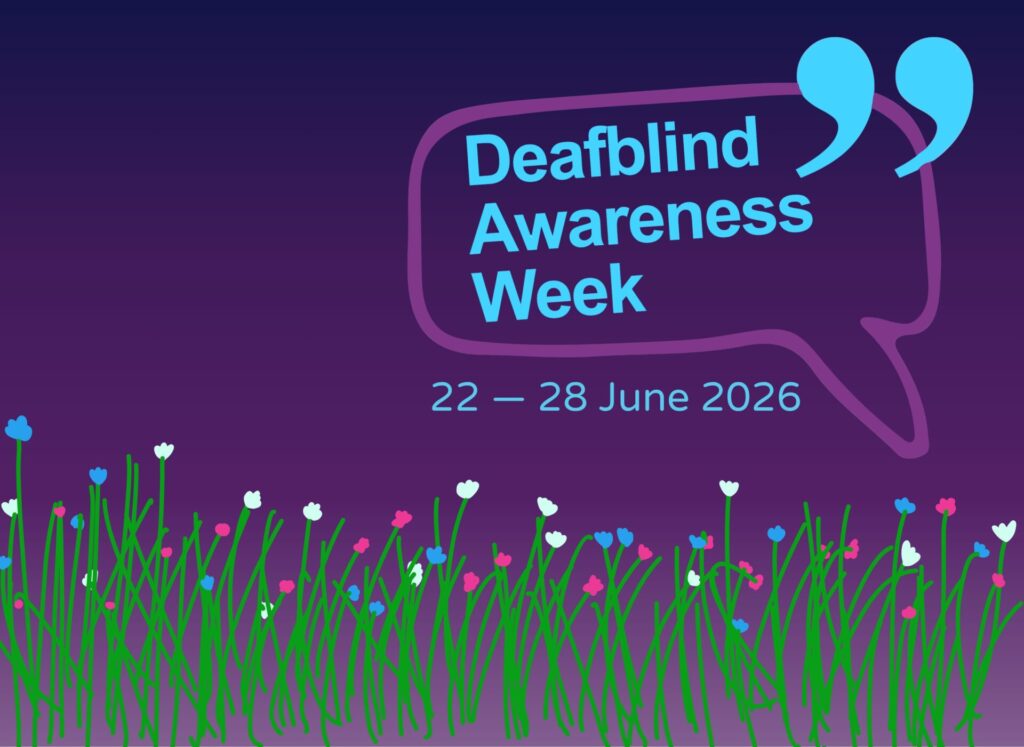
This week is Deafblind Awareness Week, observed every year in the last week of June, in honour of Helen Keller’s birthday on 27 June (Happy Birthday Helen!). This year’s theme, led by Deafblind UK, is #SeeHearUs: an invitation for deafblind people to share their strengths, skills, and abilities with the world.
A
What deafblindness actually means
a
The first thing most people get wrong is the assumption that deafblind means completely blind and completely deaf.
It doesn’t. Deafblindness — also called dual sensory loss — describes any combination of sight and hearing impairment significant enough to affect daily life. That includes people with some useful vision and some hearing. It includes people who were born with one condition and acquired the other later. It includes people whose losses are mild individually but compounding in combination — because when you can’t rely on sight to compensate for hearing loss, or hearing to compensate for sight loss, the challenges multiply in ways that are hard to fully appreciate from the outside.
There are an estimated 450,000 people in the UK living with combined sight and hearing loss — and that figure is expected to rise to over 600,000 by 2030, as the population ages and age-related sensory loss becomes more common.
A
What causes deafblindness?
a
Deafblindness has many causes, and the picture looks quite different depending on whether it is present from birth or acquired later in life.
Agg
- Age-related deafblindness is the most common form. As we age, both our hearing and vision naturally decline, and for many older adults, the combination becomes significant enough to meet the definition of deafblindness — even if neither loss alone would have been considered severe.
- Usher syndrome is the leading genetic cause. People with Usher syndrome are typically born with hearing loss and then develop progressive vision loss due to retinitis pigmentosa, often beginning with night blindness and gradual narrowing of the visual field. There are three subtypes, varying in severity and timing.
- CHARGE syndrome is a complex genetic condition affecting multiple systems, including the eyes and ears, and is one of the leading causes of congenital deafblindness in children.
a
Other causes include maternal infections during pregnancy (rubella, cytomegalovirus, toxoplasmosis), damage to the brain from meningitis, encephalitis, stroke or severe head injury, premature birth, and conditions such as Down syndrome and cerebral palsy.
A
How deafblind people communicate
a
This is perhaps the least understood aspect of deafblindness, and the most impressive.
Because the two primary channels most people rely on for communication — sight and hearing — are both affected, deafblind people and the people who support them have developed a range of communication methods that work through other channels, primarily touch.
a
- The deafblind manual alphabet is a tactile system in which letters are formed on the palm and fingers of a deafblind person’s hand by a communication partner. Each letter has a distinct shape and position, allowing fluent conversation to take place entirely through touch.
- Block alphabet involves writing capital letters onto the palm one by one — a simpler method that doesn’t require prior training, useful in situations where a deafblind person needs to communicate with someone unfamiliar with the manual alphabet.
- Tactile sign language allows people who already use sign language to continue communicating by placing their hands on top of the signer’s hands and following the signs through touch.
- Braille remains an important literacy format for many deafblind people, and refreshable braille displays connected to computers and phones allow access to digital information.
- Residual vision and hearing are used wherever possible — many deafblind people use hearing aids, cochlear implants, magnification, or screen-reading technology alongside other communication methods.
a
The specific combination of methods a person uses depends on what their remaining senses can do and what they learned to use first. There is no single “deafblind way” of communicating — it is, like most things in disability, a deeply individual picture.
A
What the #SeeHearUs campaign is asking
a
This week, Deafblind UK is inviting people with deafblindness to share a piece of content (this could be a short video, a written quote, an image—anything) showing one of their strengths. A job. A skill. A hobby. Something they’re proud of.
The campaign is deliberately broad in format because the point is that the format is accessible to each individual. Someone might film a short video. Someone else might write a sentence and share it alongside a photograph. The whole thing can be approached however works best.
If you want to take part or follow along, find Deafblind UK on social media and use the hashtag #SeeHearUs.
A
If you’re looking for specialist support for deafblindness in the UK, Deafblind UK and Sense are both excellent starting points. Deafblind UK’s helpline is 01733 358 100.
T
At RealSAM, we build technology for people with sight loss — and we believe that the right technology, designed properly, makes a real difference to independence. Find out more about RealSAM Pocket →