
RealSAM Pocket & GAAD, accessible phone for blind people, the original voice-operated phone
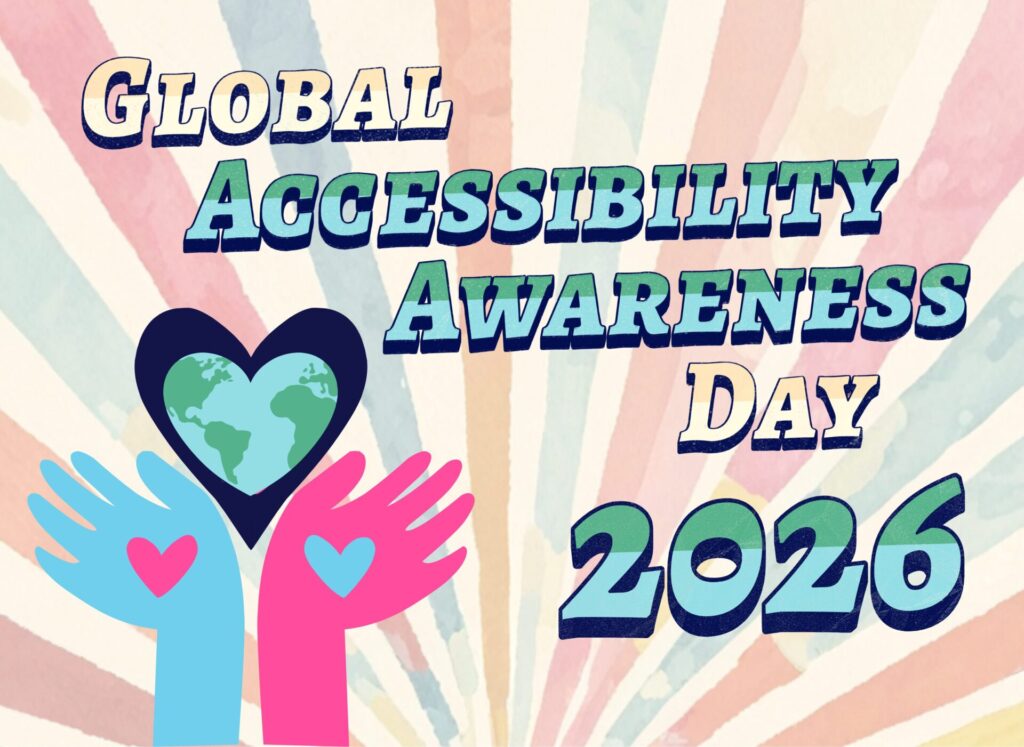
Today is Global Accessibility Awareness Day, observed every year on the third Thursday of May. Its purpose is simple: to get people talking, thinking, and learning about digital access and inclusion for the over one billion people worldwide living with disabilities.
This year, we’re marking it differently, because 2026 also marks the eighth anniversary of RealSAM Pocket—the first completely voice-operated smartphone designed specifically for blind and partially sighted people in the UK. And the two things are worth thinking about together.
A
Before Accessibility was a Talking Point
GAAD launched in 2012, inspired by a single blog post from a web developer who wanted the technology industry to take disability access seriously. In 2012, accessibility was not a standard part of product development conversations. Screen readers existed, but most software was not designed with them in mind. Smartphones were becoming the central technology of everyday life, and for blind and partially sighted people, they were becoming more frustrating, not less.
Bigger screens. Longer menus. Updates that changed how everything worked every few months. Each new generation of device brought more visual complexity, not less.
In 2018, in partnership with RNIB and O2, RealSAM Pocket launched in the UK. One button. Your voice. A phone that worked the way blind and partially sighted people actually needed it to work, not as an adapted version of something designed for sighted users, but as a device built from the ground up around voice.
It was, at the time, a genuinely unusual idea. The mainstream technology industry was still treating accessibility as a feature to be added later, not a design principle from the start.
A
What Eight Years Looks Like
Eight years is a long time in technology. Most of the apps that existed in 2018 have been updated beyond recognition. Entire categories of device have come and gone.
RealSAM Pocket still works from one button and your voice. Because some things shouldn’t change.
What has changed: the handset has improved significantly with each generation, and the software underneath has grown substantially. What began as a phone that could make calls, send texts, and read audiobooks now includes Sight assistant—a voice-activated camera tool that reads text, identifies objects, describes surroundings, and supports independent navigation. It includes guided walking routes, live emergency assistance, access to RNIB Talking Books and Calibre Audio, newspapers, magazines, and more.
The core idea—that a blind or partially sighted person should be able to pick up a phone and use it immediately, without training, without sighted help—remains exactly what it was in 2018.
A
2022: Trusted Beyond the UK
In 2022, RealSAM technology was selected via competitive bid to create prototypes for the National Library Service for the Blind and Print Disabled (NLS) — the Library of Congress’s programme serving more than 800,000 registered readers across the United States. The NLS does not make these selections lightly. It was a signal that what had started in a UK partnership with RNIB was now recognised at the highest level of accessible technology provision in the world’s largest English-speaking market.
At the time, “accessible tech” was becoming a phrase that generated investment and press coverage. The gap between what was marketed and what actually worked for people with significant vision loss remained wide. Endorsement from institutions like the NLS mattered precisely because it came from people who knew the difference — and had the evidence to judge.
A
RealSAM Pocket in 2026: the A17
This year, RealSAM Pocket moves to the Samsung Galaxy A17 handset. For users, the most meaningful change is in the camera: the A17 includes optical image stabilisation, which means Sight assistant produces steadier, clearer image captures — a direct improvement for anyone using the object recognition and OCR features in daily life.
The A17 is also lighter than its predecessor, making it easier to hold for longer, and comes with six years of guaranteed software support through to 2031.
The interface — one button, your voice — remains unchanged.
Find out more about RealSAM Pocket on the A17 →
RealSAM Pocket & GAAD, accessible phone for blind people, the original voice-operated phone
Why GAAD Still Matters
The GAAD Foundation’s mission is to disrupt the culture of technology and digital product development to include accessibility as a core requirement. That word — disrupt — is worth sitting with. Because the default in technology development is still, in 2026, to build for sighted, non-disabled users first and adapt for everyone else later.
The progress is real. Screen readers are better. Major platforms have improved their accessibility features significantly. There is more awareness of digital inclusion than there was in 2012 or 2018.
But for many blind and partially sighted people, the experience of mainstream technology remains one of workarounds, barriers, and features that work in theory and don’t in practice. GAAD matters because the work isn’t done.
What RealSAM has always believed — and what eight years of evidence supports — is that the most effective accessible technology isn’t adapted. It’s designed. The difference matters enormously to the people who use it.
A
Getting Involved in GAAD 2026
If you’re a developer, designer, or anyone who builds digital things: today is a good day to open a screen reader and try to navigate your own product with it. WebAIM’s accessibility checker is a simple starting point.
If you’re blind or partially sighted and looking for a community, RNIB’s website has a page featuring practical tips and support, and their helpline
RNIB’s helpline — 0303 123 9999 — can connect you with local support, technology guidance, and resources.
And if you’d like to find out whether RealSAM Pocket might be the right accessible phone for you or someone you care about, you can contact us or book a free demonstration— simple and easy; no pressure, no obligation.
Eight years on. One button. Your voice. Still here. RealSAM Pocket & GAAD accessible phone for blind people