
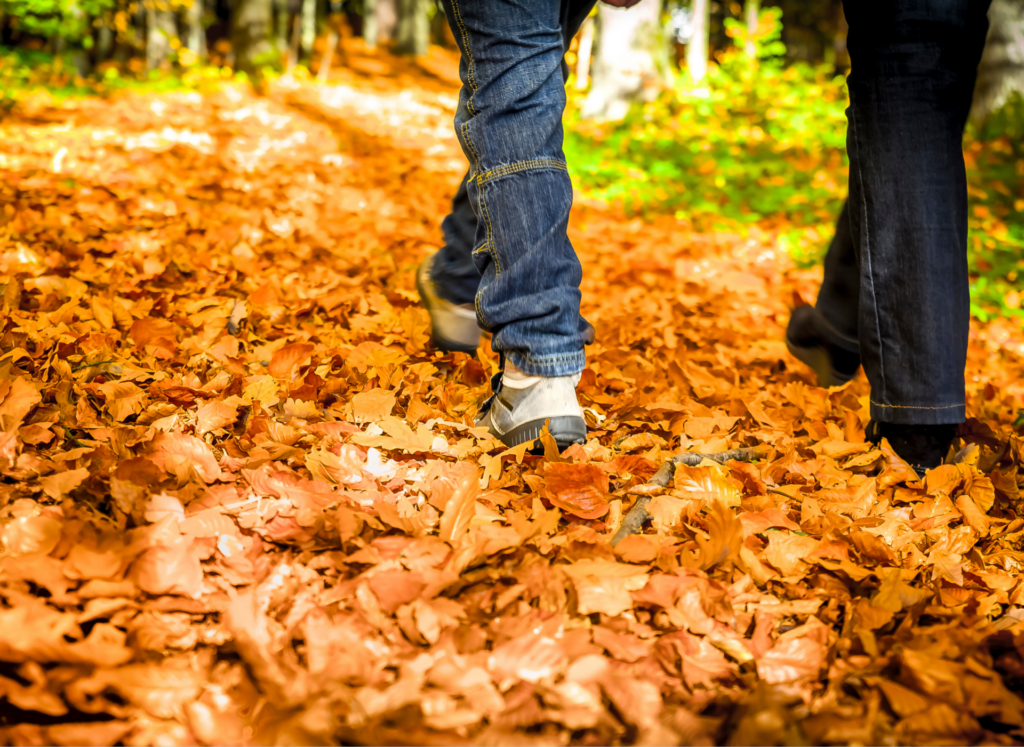
Autumn is one of the most sensory-rich seasons there is, filled with sensations that speak to all of the senses. The smell of cold air coming through an open window for the first time since March. The crunching sound underfoot on a woodland path walk. The feeling of a warm, sweet drink being held by cold hands. The way food tastes richer when it’s properly cold outside. This is a guide to sensory-rich autumn activities for blind and visually impaired people across the UK, with activities, specific organisations, and practical tips for getting out and doing things.
Walking and getting outdoors
Autumn is one of the best seasons for walking, partly because the heat has gone and partly because deciduous woodland sounds genuinely different in October than it does in July. The density changes, the acoustics change, and the texture underfoot is distinct in a way that doesn’t require sight to appreciate.
Guide Dogs UK runs a My Sighted Guide service that trains family members and friends to guide someone with sight loss safely and confidently. If walking outdoors has felt difficult or hasn’t been happening, this is worth knowing about. The training is free.
Local sight loss charities frequently organise guided group walks during autumn. Your nearest RNIB group or regional sight loss charity is the quickest way to find what’s available locally. Our guide to support for people with sight loss in England lists regional organisations by area.
The National Trust has accessible trails at many of its properties. The accessibility section of their website lists specific provisions by site, including path surfaces and gradient information. Calling a property directly before visiting always gives more reliable and current information than the website alone.
Food Markets and Sensory Experiences
Autumn is the best season for food markets, and food markets are one of the most naturally accessible public spaces there is. The navigation is manageable, the sensory experience is rich, and there is no requirement to look at anything to have a genuinely good time.
Borough Market in London runs year-round, but autumn brings its strongest seasonal produce. Most stallholders are happy to describe what they have and offer samples. Local farmers’ markets across the country follow the same pattern. Searching for your nearest one via Local Foods (localfoods.org.uk) or FARMA (farma.org.uk) will show what’s available by postcode.
Audio-Described Theatre and Live Performance
Most major theatres in the UK offer audio-described performances for each production, where a trained describer narrates the visual elements of the show through a small earpiece. Autumn is when many of the year’s most significant productions open.
RNIB’s theatre listings carry information on upcoming audio-described performances across the UK. The Access section of individual theatre websites also lists scheduled dates, though these are sometimes added late, so getting on a theatre’s access mailing list is more reliable.
The V&A Museum in London runs a regular programme of free touch tours and sensory events for blind and partially sighted visitors. Their What’s On page lists upcoming events. The British Museum and Natural History Museum run similar programmes.
Sport and Physical Activity
British Blind Sport coordinates accessible sport across the UK, including tandem cycling, swimming, goalball, cricket, and running. Their website lists clubs and activities by region. Autumn is when many indoor activities and new club seasons begin, making it a natural time to start something.
Tandem cycling with a sighted pilot is particularly well-suited to autumn conditions and is available through a number of Cycling UK affiliated clubs as well as specialist organisations. Autumn activities for blind and visually impaired people.
Staying Connected Through Listening
Autumn is also the season when staying in stops feeling like a compromise and starts feeling like the right call. Long evenings, darker mornings, the particular quality of an October afternoon that asks you to slow down.
For blind and partially sighted people, this is genuinely a good time to explore what’s available through accessible listening. RealSAM BookClub brings together RNIB Reading Services, LibriVox, UK newspapers, podcasts, and radio in one voice-first service. Start on your RealSAM Pocket, continue on Alexa, or access it through the iOS, Android, or web app. From £4.99 a month.
Our September pick is The Guest by Emma Cline. Eight and a half hours. Very good for October.
Practical Note
The most useful single step for finding accessible activities near you is to contact your local sight loss charity directly. They know about things that don’t appear on national websites, including local walking groups, activity programmes, and seasonal events. RNIB’s helpline on 0303 123 9999 can point you toward the right local contact wherever you are in England.
We hope that this list of potential autumn activities for blind and partially sighted people was helpful and gave you some new ideas for embracing the season!